Fun With High Voltage!
Updated 1/5/2026
In the world of electronics, high voltage is specifically one of my passions (as is obvious by
how many tesla coil projects are on my page).
Tesla coils aren't the only way to generate huge arcs of plasma! Ionizing the air around you
can be done simply and fairly safely (or dangerously) with a multitude of methods. The easiest way to
make more volts out of less volts is with a transformer. To the right is a video
of me drawing an arc off of my "ignition transformer", which outputs around 6000 volts at 30mA.
An interesting thing to note is that the arc only begins to form at around half-a-centimeter away but
can be "drawn" out to an around two centimeter arc. The ionizing breakdown of the air is difficult to
start, and relies on a huge voltage potential, but keeping the air ionized is a much easier task. The
arc length that I am able to "draw" depends on the power of the arc. It is proportional to the current.
As an example of this dichotomy between voltage and current in an arc, here is a much lower, 2000v
arc from a microwave oven transformer with two resonant capacitors. This arc is probably 20x the length!
This is because a microwave oven transformer outputs a much larger, ~500mA. Again, a long arc is only
attained by "drawing" out the arc.
This arc is also much, much more dangerous due to the high currents. Most people agree that touching
microwave oven transformer arcs are a good way to die before you hit the ground!
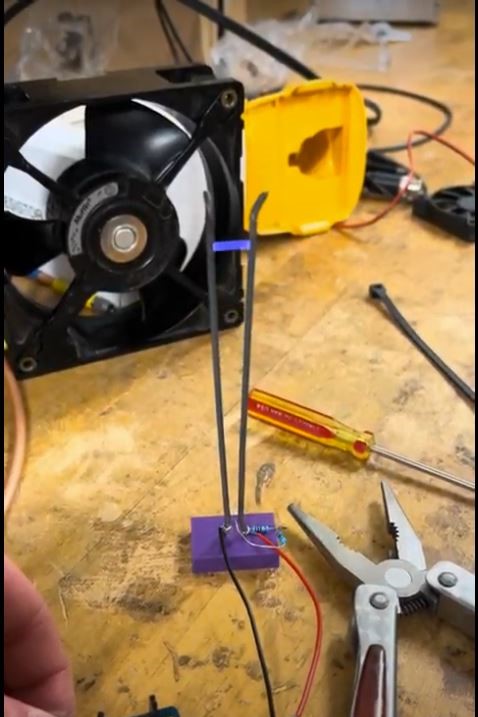
Jacob's Ladders are always fun little ways to test an arc. Just two little pieces of wire and the arc will race up!
This tiny ladder is driven off a coil from an arc lighter. ^^^
------------------------------------>
This is a small jacobs ladder made with the 6KV, 30mA, ignition coil arc
The simple addition of a couple of high voltage capacitors and diodes to the end of a transformer
can yield huge voltage gain and super energetic pulses! This configuration is the common voltage multiplier
or Walton Cockroft generator.
If you ever see those popular "high voltage modules" in the black epoxy tube
on the internet, they contain a single ignition transformer and a 2 stage voltage multiplier.
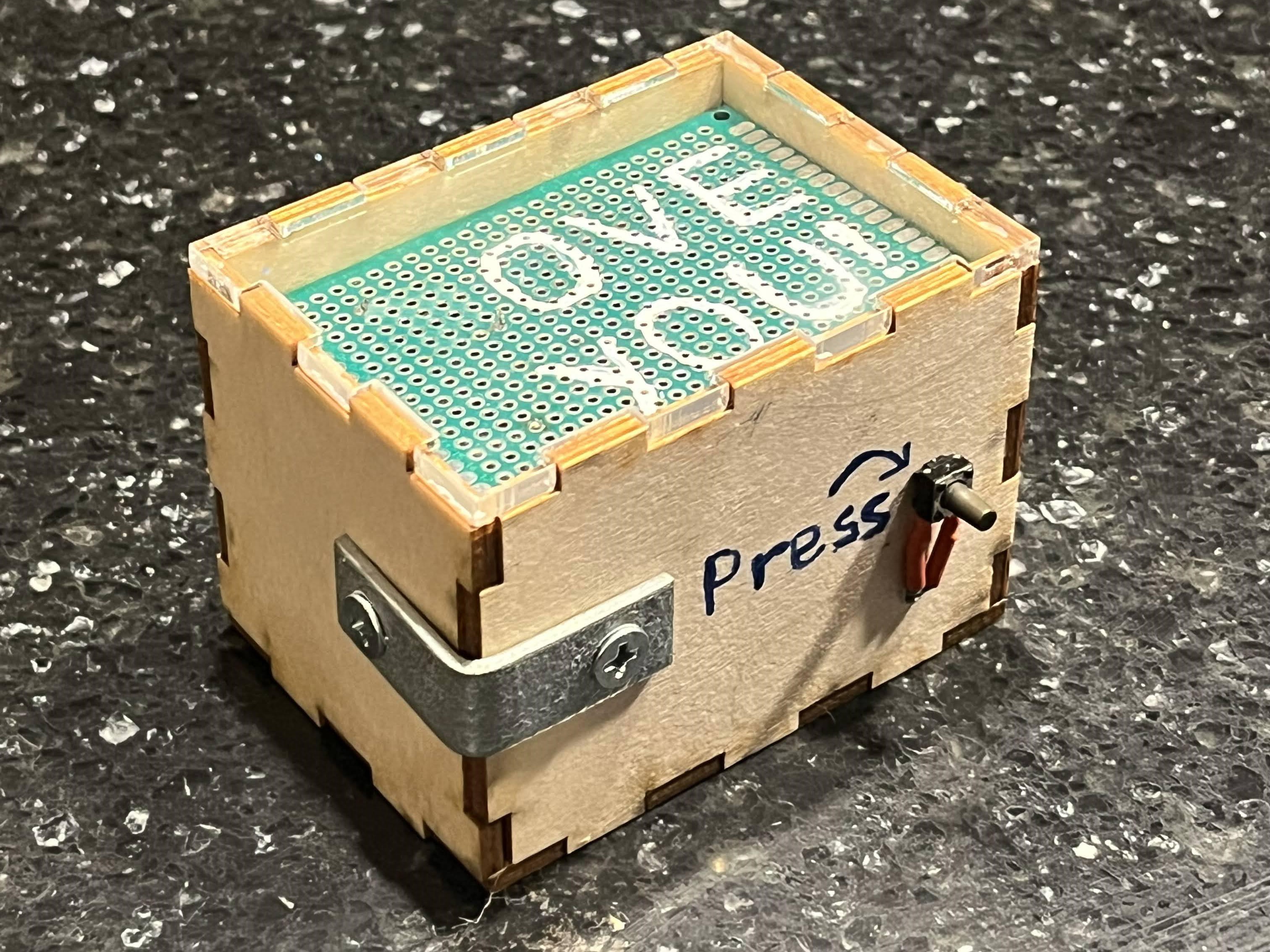
This is a cute little high voltage box I made for a fathers day present I think? It has a singular button which initiates the arc run off a salvaged vape-battery.
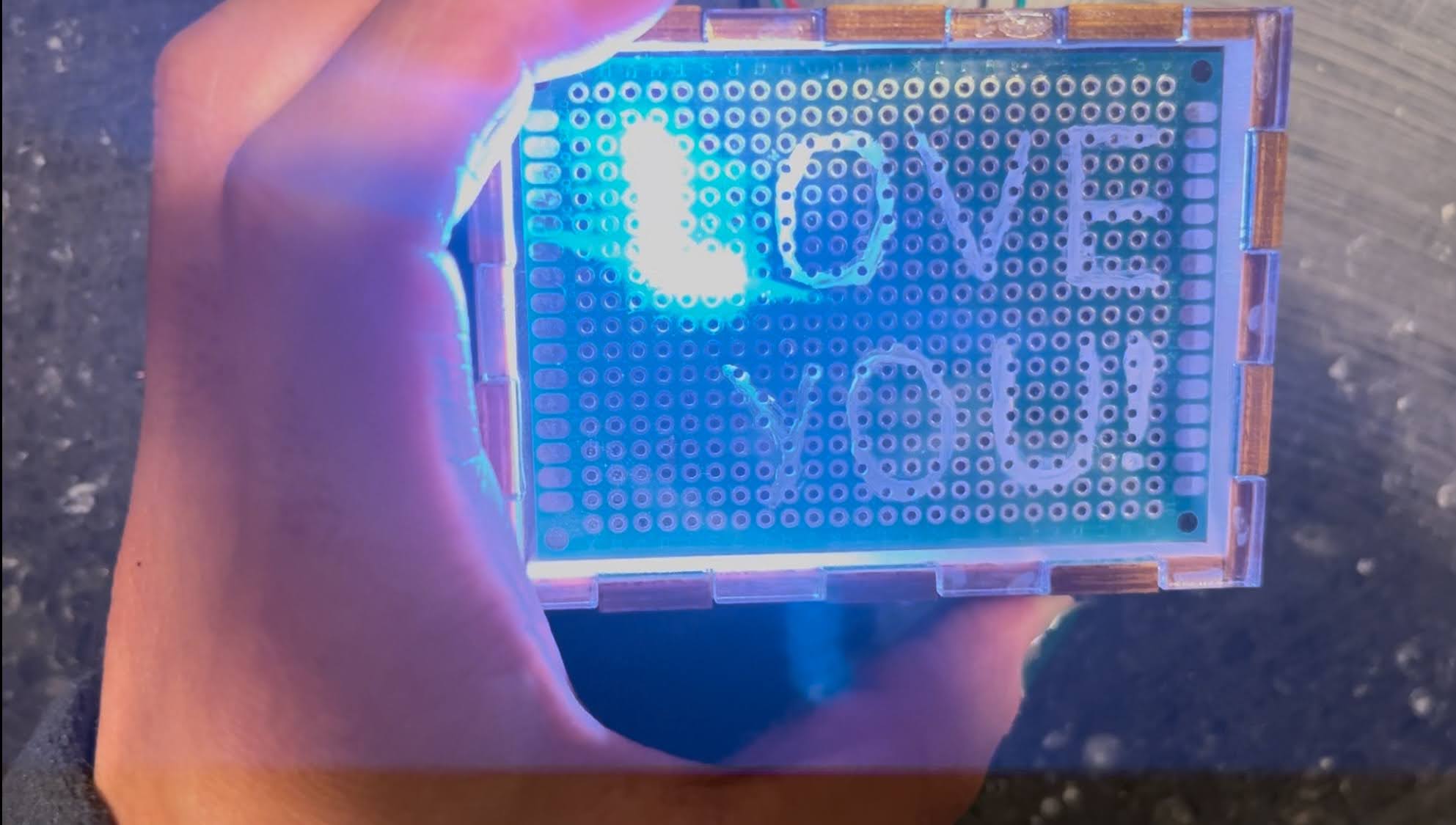
...What happens when you hit the button! The arc goes from pad to pad of the proto-board, creating an "L" shaped pattern, completing the message! I'll add that it doesn't always create an "L", but sometimes a "Z" or inverted L. For some reason though, the tolerances in this proto-board mean that an "L" is usually drawn by the arc.
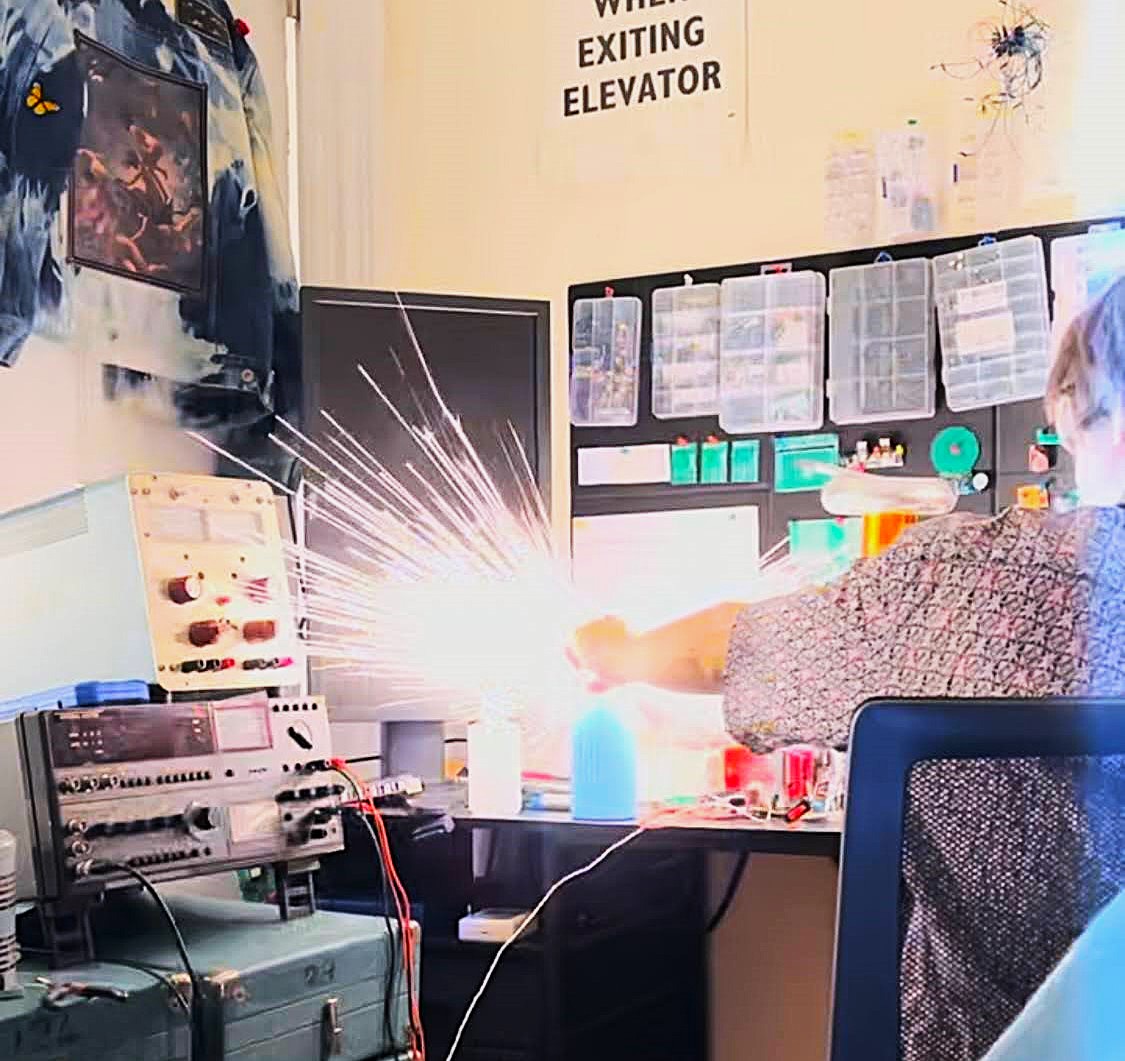
Some people consider 110V to be high... and since we're talking about sparks, I'll talk about capacitors!
This is a picture of me discharging a large capacitor through a screwdriver. The sparks come from the metal of the
screwdriver and contacts vaporizing upon impact!
Ok, capacitor explosions like this aren't actually extremely high voltage, and rather, are violent
due to very high current! Still, I'm putting it on this page for now.
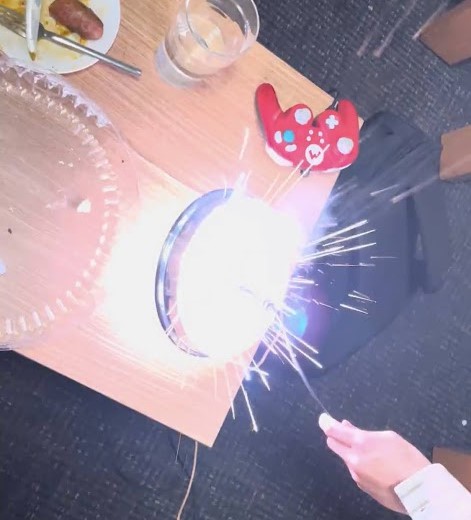
Plugging a small capacitor into a wall creates a sparking, small little explosion! I believe these
are the perfect "indoor firecrackers" as they are (relatively) quiet, super cheap, and don't cause much damage.
Different sized capacitors behave differently however, and shrapnel should always be watched out for!
I should probably mention this: don't do this yourself! Messing with wall power and exploding shrapnel is bad!!
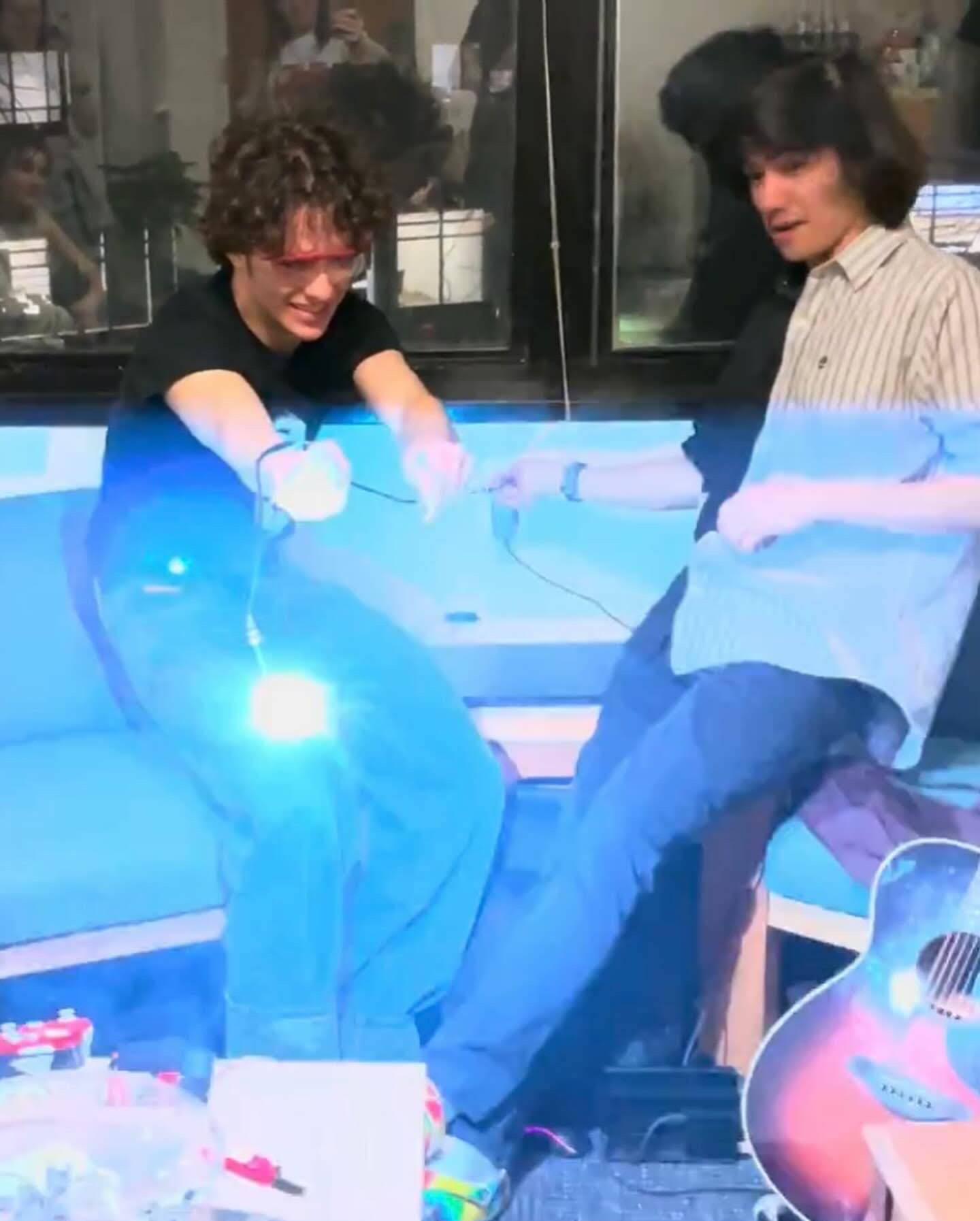
Videoing a capacitor explosion is another part of the fun! Forwarding to just the right frame, you can almost always get a frame of pure, giant sparks, and a frame of intensely bright glow! Here's an example of the blue glow of the capacitor lighting up an entire room as it explodes!